1903: twelve seconds above the sand
Lift, control and propulsion came together at Kitty Hawk.
Event period: 1903 CE — separate from publication date
Also known as: Wright brothers · Orville Wright · Wilbur Wright
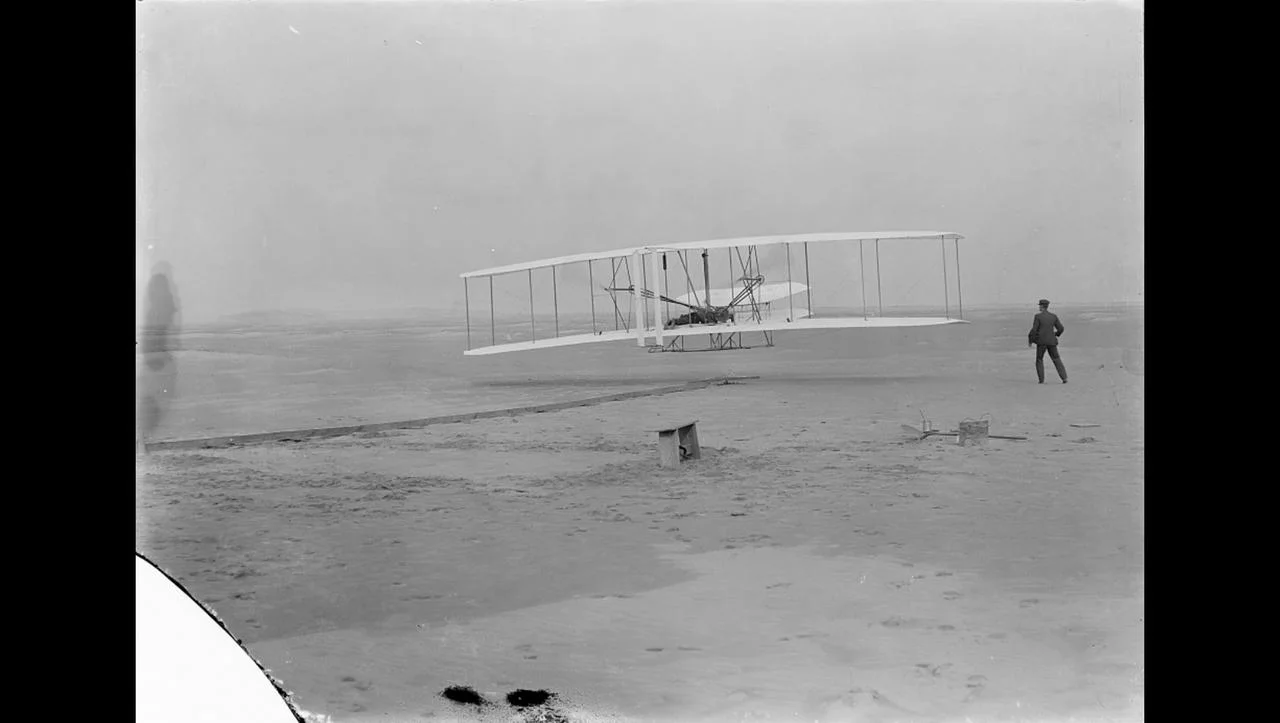
17 December 1903
Orville Wright piloted the Flyer for 12 seconds and about 120 feet near Kitty Hawk, North Carolina. The brothers alternated at the controls over four flights that morning; the final flight lasted 59 seconds.
Before the engine
Glider trials and wind-tunnel measurements helped the brothers develop their control system and revise their understanding of lift. Adding power was one part of a larger engineering effort.
A precise milestone
This entry follows the Smithsonian’s account of powered, controlled flight. It does not turn that definition into a claim that balloons, gliders or earlier flight experiments never existed.
Claims and evidence
The brothers made four flights on 17 December 1903; the first lasted 12 seconds.
Sources
- 1903 Wright Flyer — Smithsonian National Air and Space Museum
Historical account: 1901 wind-tunnel tests, 1902 glider, 17 December 1903 flights and damage afterward.
Source accessed 2026-10-28